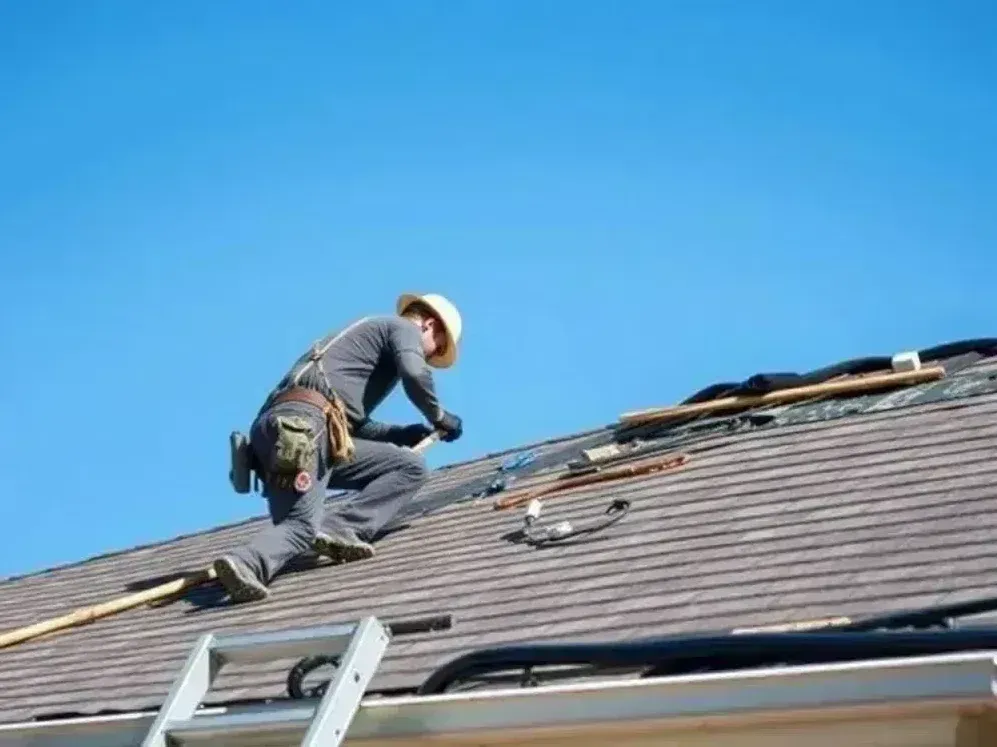
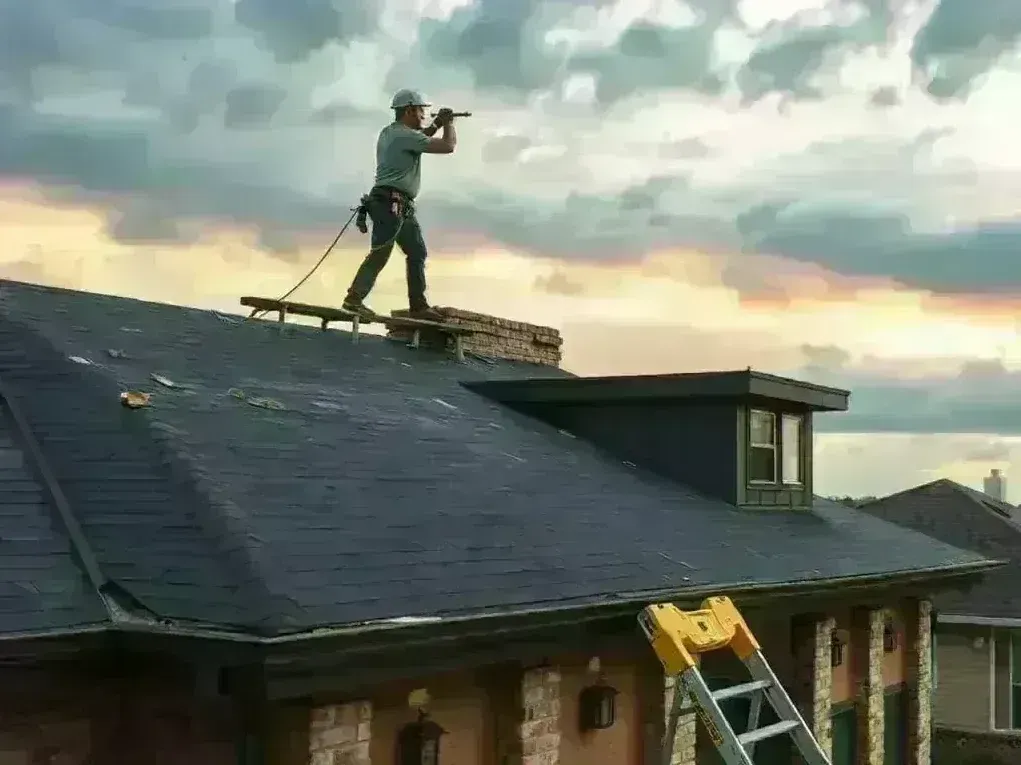
Torch down roofing welds a roll of modified bitumen membrane to the roof deck with a propane torch, fusing the laps into one continuous sheet. No adhesive cans, no solvent fumes, and very little debris for the dumpster.
Flat and low-slope sections on 1960s and 1970s ranch-style homes and mid-century modern tract homes fail at the seams first. Heat and fire season winds bake the surface, winter downpours find every lap, and moderate temperature swings work the material until it splits.
A torch-applied cap sheet with granule surfacing or a reflective coating holds up better here than standard rolled roofing, because it resists UV breakdown through hot, dry summers and stays flexible when the temperature drops at night.
- Self-adhered ice-and-water shield goes over the plywood or OSB sheathing at the eave and valley, so ice dam backup can't wick into the deck.
- New step flashing, counter-flashing, and apron flashing at every sidewall, plus fresh chimney flashing, pipe flashing, and vent boots hand-sealed in mastic or roof cement.
- Parapet, scupper, and coping detail gets rebuilt on flat sections, since that's where ponding water sits and spalls the surface.
- Rotted sheathing, rafter tails, and purlins get replaced once the old felt, tar paper, and underlayment come off.
- TPO, EPDM, and PVC membrane suit large commercial rooftops; modified bitumen and torch down suit smaller residential flat sections.
- Roof coating over a sound built-up roof can buy years, but it won't fix ponding water or a failed substrate.
- Skylight installation and dormer work get re-flashed at the same time, because that's where flat-roof leaks usually start.
- Hip, gable, mansard, and gambrel shapes, plus small canopy, awning, and porch overhangs where flashing detail matters more than square footage.
- Ridge cap and ridge vent get replaced together, so attic ventilation doesn't pull moist air back into the sheathing through the soffit vents.
- Wood shake, cedar shake, slate, clay tile, and concrete tile roofs get the right fastener and underlayment rather than a one-size approach.
- Insurance claim assistance with photos and a line-item scope when a covered storm caused the damage.