A metal roof replaces the shingle field with interlocking panels that lock along the seams and shed water past the eave.
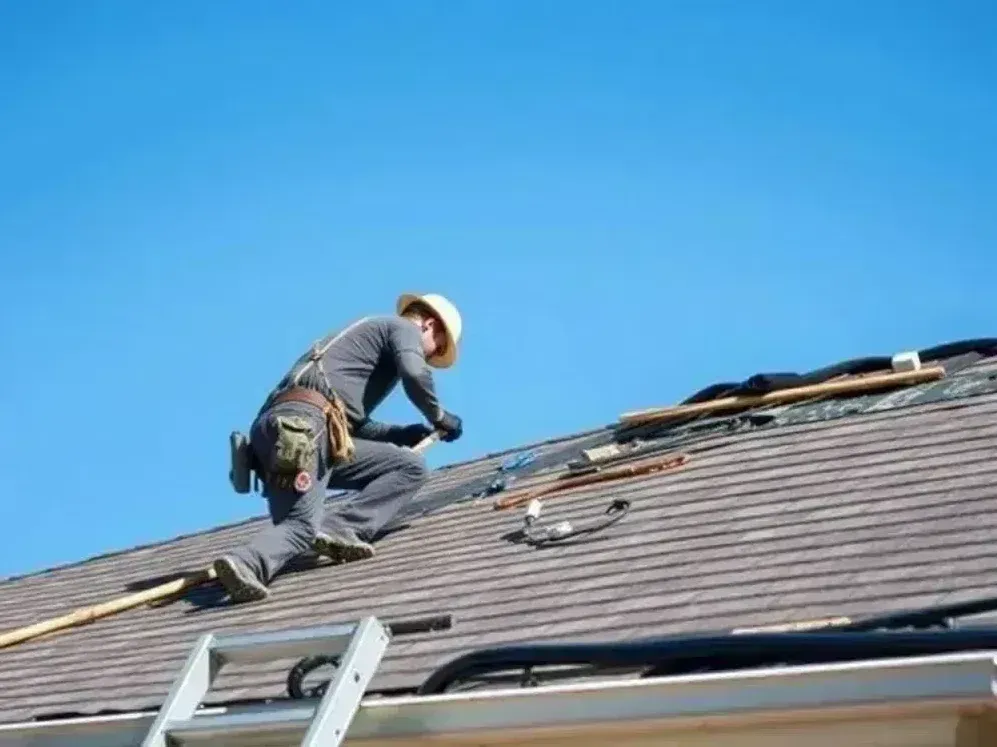
We tear off the old asphalt shingle or cedar shake down to the sheathing, then replace rotten plywood or OSB before anything new goes down.
Standing-seam panels clip together with a concealed fastener, so nothing pierces the field course and water has fewer ways in. Exposed-fastener panels and corrugated panel profiles cost less and fit barns, carports, and porch roofs.
Steel comes in 24- and 26-gauge, usually finished with a PVDF or SMP coating that resists fading and chalking for decades. Aluminum is the better call within a mile or two of the bay, where salt air erodes lesser finishes.
Stone-coated steel from Decra, ATAS, and McElroy Metal copies the look of tile, slate, or cedar shake at a fraction of the weight. That matters on a 1960s ranch whose rafters were never sized for clay tile.
A reflective coating on a metal roof bounces summer heat before it reaches the insulation, which trims attic temperatures and cooling bills.
That is the closest thing to green roofing most Concord homes need, and it costs far less than tearing off a working roof.
What a metal roof system includes on a Concord home
- Metal panels are formed to your roof pitch and cut on site, so each piece lands flat on the deck without a gap.
- A ridge cap closes the peak, where wind-driven rain and fire season gusts push hardest.
- Drip edge runs along every eave and rake so runoff leaves the fascia instead of wicking back into the sheathing.
- An open or closed valley channels water where two roof planes meet, the spot we see leak first on older Concord homes.
- Step flashing protects sidewalls, counter-flashing seals the chimney flashing, and a vent boot or pipe boot keeps stacks dry.
- Synthetic underlayment covers the roof deck, and a self-adhered ice-and-water shield lines the eaves and valleys.
- Ring-shank nails and screws sized to the decking hold each panel, driven with a nail gun and checked by hand.
- A ridge vent and soffit vent move attic air so the attic fan is not fighting a sealed box, and added insulation keeps the deck dry.
- Every panel leaves the factory with a PVDF or SMP coating, and an older metal roof gets a field-applied recoat instead.
- An architectural shingle or three-tab shingle is the cheaper path if you stay with shingles, while wood shake or concrete tile changes the weight your deck must carry.
Signs your current roof is at the end of its life
- Granule loss in the gutters means the asphalt shingle is heading toward end-of-life wear.
- Rotten fascia or soft sheathing tells you water has been wicking behind the drip edge all season.
- A sagging roofline or settled valley points to a rafter or ridge beam problem, not just a worn surface.
- Curling shingles and cracked flashing let water seep past the underlayment and into the deck.
- Rust flakes, peeled paint, and a corroded substrate show on old metal panels before they leak.
- Ice dams along the eave push meltwater backward under the courses every winter.
- Moss and dark streaks hold moisture on a north slope and shorten the life of any roof.
How a metal roof installation runs, step by step
- Roof inspection first: we walk the rooftop, check the deck from the attic, and photograph the valleys, flashing, and chimney.
- A line-item roof estimate follows, priced by the square with the tear-off, dumpster, and debris hauling written in.
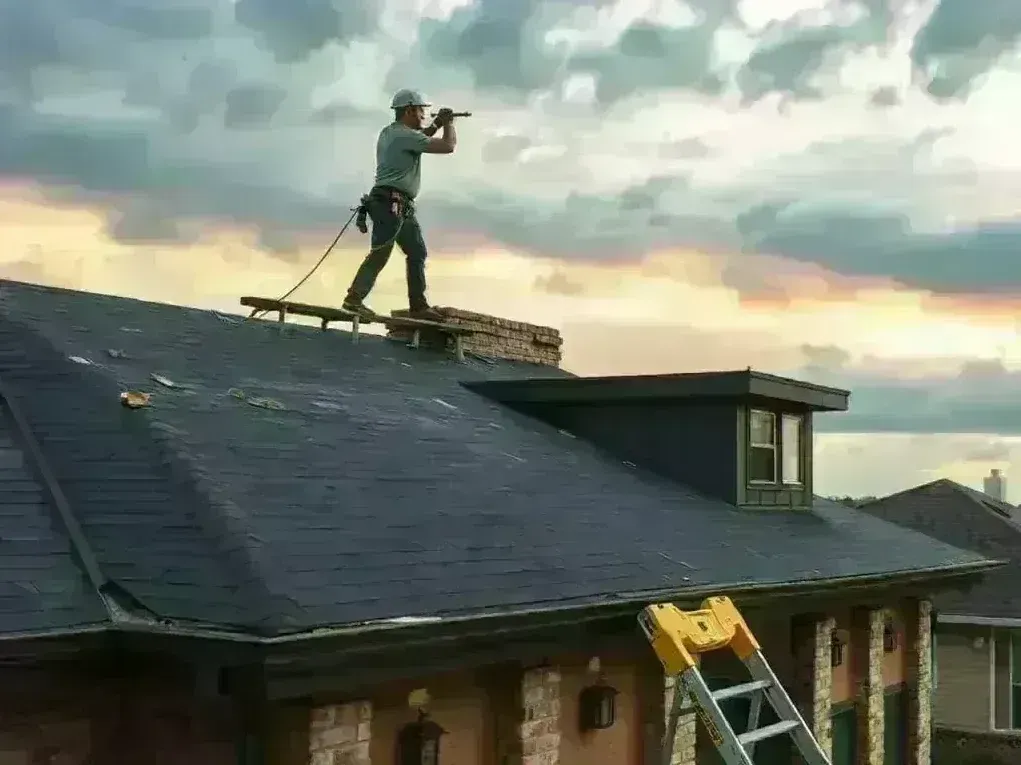
- We set the dumpster, hang a safety harness, and run ladders or scaffold to reach the rake and ridge.
- Tear-off comes next: a roofing shovel, pry bar, and roofing square strip the old felt, tar paper, and roofing felt down to the decking.
- Deck repair: rotten plywood or OSB is swapped, and the truss or joist below gets checked before we cover it.
- Underlayment and flashing go down, starting with the self-adhered ice-and-water shield at the eave and valley.
- Panels go up in staggered courses over a batten or counterbatten, with the first run set as a starter course.
- The nail gun and air compressor get checked for overdriven fasteners, then sealant, roof cement, or mastic goes on every flashing.
- Final walkthrough: we test the valley with water, verify the ridge vent, and hand over the warranty paperwork.
Roof shape changes the details. A hip or gable roof takes panels in long runs, while a dormer, skylight, or mansard breaks the field into small pieces that need apron flashing and boot flashing.
Overhangs, a canopy, or an awning over an entry all need the same treatment at the panel edge.
A gambrel roof gets a closure at the break between slopes, and at each gable verge we fit a strip so wind cannot drive rain under the last panel.
On a commercial parapet or scupper detail we add coping and waterproofing. Weatherproofing a Concord rooftop is mostly about the details you cannot see, and every penetration gets an anchor point for a fall-arrest harness.
We also handle drainage: a gutter and downspout sized to the roof area, plus soffit and fascia repair done during the tear-off.
Snow guards go on steep north slopes where a sliding panel could drop onto a walkway. Caulk and adhesive stay sparingly used, only where a mechanical fastener will not work.
Everything is permitted and inspected to California building code, including the vapor barrier and the ventilation numbers an inspector wants on paper.
For flat or low-slope sections we install TPO, EPDM, or PVC membrane instead. We can also patch an older built-up roof or modified bitumen with a torch-down repair when a full rebuild is not in the budget.
We are a licensed, insured Concord roofing contractor serving Downtown Concord, Willow Pass, Meadow Homes, Lime Ridge, and Concord Hills. Our roofers handle residential roofing all week and take commercial roofing jobs when a warehouse or retail building needs a flat system.
A roof above Lime Ridge takes more UV than one under the trees near Todos Santos Plaza, and homes on the Concord Hills side see fire season winds funneling off Mount Diablo.
We size the coating and the fastener pattern for that exposure. Winter rain with occasional heavy downpours tests the valley and the eave before anywhere else.
Metal roofing is not the right answer for every Concord home. On a steep, cut-up roofline with six dormers, a shingle or tile roof often costs less and performs the same, and we will tell you that before you sign anything.
Call +19257224916 for a free roof estimate and a written scope of work.