East Bay Roofers: A Concord Roofing Contractor Since 1988
We started in 1988 with one truck and a two-man crew, doing roof repair on the 1960s and 1970s ranch-style homes near Downtown Concord.
Our founder came out of commercial flat work, so we learned early how a rooftop sheds water and where it fails first. We still run out of 2310 Bates Ave #AA.
Thirty-eight years later we are licensed and insured, and still a roofing company that shows up when it says it will. Call (925) 722-4916.
Roofing Services We Run Out of Our Concord Shop
Roofing services here cover everything from one cracked pipe boot to a full roof replacement on a Concord Hills home. We take residential roofing, commercial roofing, and emergency roof repair calls.
- Roof repair for leaks that seep past a failed pipe flashing, wick along a valley board, or erode the sealant at a vent boot.
- Roof replacement with a full tear-off when the decking feels soft, and a written roof estimate before the first pry bar touches the roof.
- Storm damage repair after a winter downpour drives water under a lifted field course or a loose ridge cap.
- Gutter installation, including downspout routing that carries runoff away from the fascia board.
- Metal roofing, roof coating, and skylight installation for owners who want a longer service life out of the assembly.
- Insurance claim assistance when a storm date and a line-item estimate have to line up with an adjuster's inspection.
Ice Dam Removal and Winter Roof Repair: How Water Gets In
Ice dam removal is mostly an attic problem. Heat escaping the house melts frost on the warm deck, and it refreezes at the cold eave. We melt an ice dam with steam ice equipment instead of chipping at it.
From there, water seeps under the field course, wicks through the underlayment, and reaches the sheathing. Left alone, it rots a rafter and spalls the plaster below.
- Granule loss is the first sign of end-of-life wear on an asphalt shingle, and bare patches follow within a season or two.
- Rot and decay in the fascia show up as paint that flakes and peels instead of drying.
- A sag in the roofline usually points to a rafter or ridge beam that has taken on water.
- A settle crack around the chimney flashing opens a path for every heavy rain.
- A failed pipe boot under a vent flashing is the cheapest leak to mend and the one we see most.
Roofing Materials We Install on Concord Homes
What goes on the roof decides how long it lasts, and Concord swings from hot, dry summers to heavy winter rain. We match the material to your roof pitch and to your framing.
- Three-tab shingle is the lightest asphalt shingle we stock, and it fits a tight budget on a simple gable roof.
- Architectural shingle gives a thicker profile and resists wind uplift better on an exposed roofline.
- Wood shake and cedar shake suit mid-century modern tract homes, though they want more maintenance.
- Slate, clay tile, and concrete tile last the longest, and they need a stronger truss package underneath.
- Metal panel, standing-seam panel, and corrugated panel shed debris well, which matters under the trees near the Walnut Creek Staging Area.
- TPO, EPDM, and PVC membrane cover flat and low-slope sections, along with a built-up roof or modified bitumen system on a detached garage.
- Tar and asphalt held together with bitumen and felt are what most older Concord roofs were built with, and we still restore them.
Underlayment, Flashing, and the Layers That Keep Water Out
Most leaks we open up are not in the middle of the field course. They start at an edge, a joint, or a penetration, which is why we spend the time on the layers under the shingle.
- Synthetic underlayment replaces roofing felt and tar paper with a tear-resistant sheet that will not buckle in the heat.
- A self-adhered ice-and-water shield runs along the eave and up the valley, where water sits longest.
- Drip edge protects the eave and the rake, keeping runoff off the fascia and out of the soffit.
- Step flashing and counter-flashing tie the roof into a sidewall, and chimney flashing handles the masonry.
- Pipe flashing, a pipe boot, or a vent boot seals every plumbing and exhaust penetration.
- Apron flashing and boot flashing cover the low side of a dormer or a skylight curb.
- Mastic, roof cement, sealant, caulk, and adhesive close small gaps, and we treat them as a patch rather than a fix.
- Ring-shank nails hold the starter course, and we set every field course in staggered courses with the right head lap.
Roof Shapes and Framing We Work With
- A hip roof and a gable roof drain differently, and the valley between two planes is where debris collects.
- A mansard, a gambrel, or a small canopy over a doorway all need flashing tailored to the shape.
- A parapet wall on a commercial building hides the roof edge, so the scupper has to move water off deliberately.
- Metal coping caps the parapet, and where it lifts, rain gets behind the wall.
- An awning, a dormer, and an overhang each interrupt the field course, and the verge at a rake edge takes the most wind.
- A purlin, a batten, and a counterbatten support tile and metal systems that need a ventilated air gap.
- A truss, a rafter, a joist, and a ridge beam carry the load, and we check all of them before adding tile weight.
Tools and Safety on a Concord Rooftop
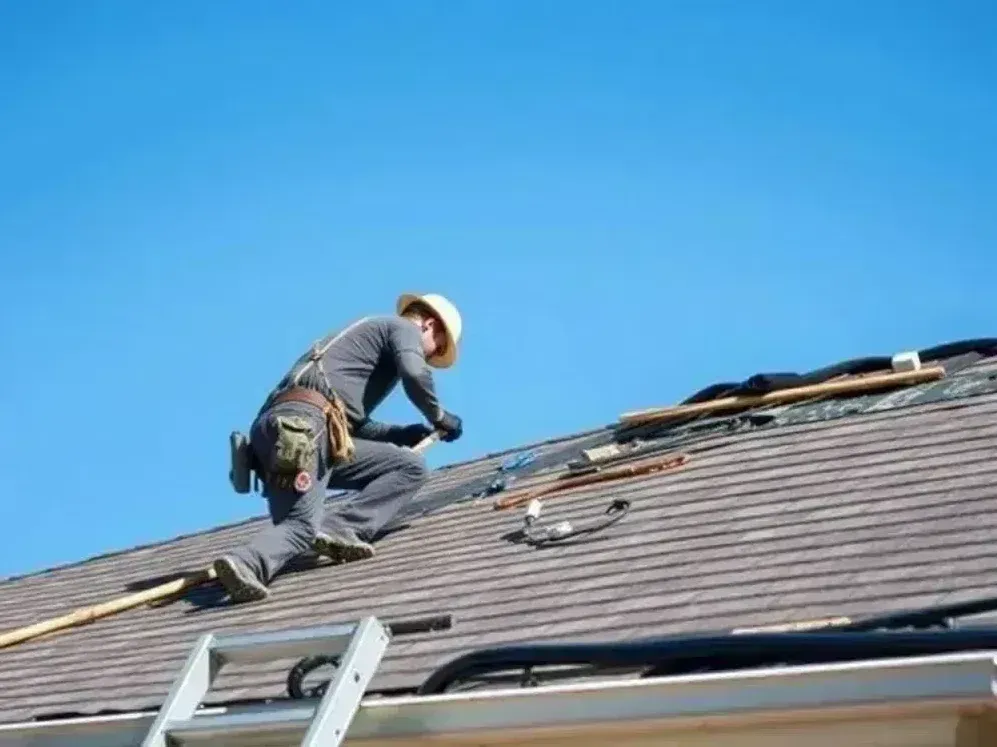
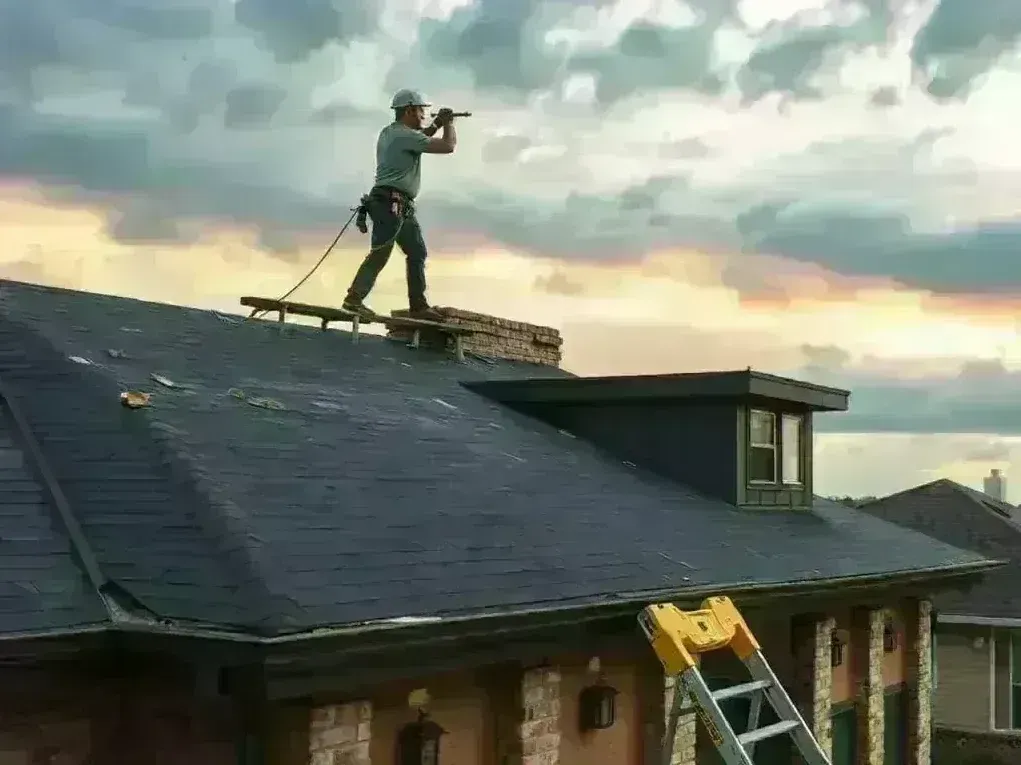
- Every roofer on the crew wears a safety harness anchored off the ridge, and we set scaffold and ladders before the first bundle goes up.
- A roofing square, nail gun, and air compressor speed the straight runs, while a pry bar and roofing shovel handle tear-off.
- A torch is reserved for modified bitumen on flat sections, never near dry debris.
- Screw and fastener choice depends on the substrate, because an overdriven nail is a leak we have to reseal later.
- A snow guard rarely makes sense at Concord's elevation, so that budget goes to waterproofing and weatherproofing details instead.
Roof Replacement or Overlay? How We Decide
A recover or overlay adds a layer on top of the old one and saves the dumpster. A full tear-off lets us see the substrate, and that is what we recommend when we find rot, decay, or soft decking.
- A roof inspection with photos of the decking, the flashing condition, and the moisture content in the sheathing.
- A line-item estimate that separates tear-off, material, and labor instead of one lump number.
- Tear-off down to the plywood or OSB, with the dumpster and debris hauled off the same day.
- Deck repair on any rotted sheathing, since a nail driven into soft wood will not hold.
- Ice-and-water shield, synthetic underlayment, and new drip edge before the first shingle goes down.
- Starter course, then field course laid in staggered courses with ring-shank nails and correct head lap.
- Ridge cap, ridge vent, and a ventilation check so the attic can breathe.
- A final walk with you, plus a magnetic sweep for stray fasteners and nails in the driveway.
Ventilation, Energy Efficiency, and Green Roofing Options
Energy efficiency starts in the attic. A roof that cannot breathe cooks the insulation below it, and that trapped heat shortens the life of every component above.
- Ridge vent and soffit vent working together push hot air out at the ridge and pull cooler air in at the eave.
- An attic fan helps on a low-pitch roof, though it will not replace balanced intake ventilation.
- A reflective roof coating lowers surface temperature on a flat or low-slope section through a Concord summer.
- A vapor barrier under the insulation keeps attic moisture from condensing on the underside of the roof deck.
- Green roofing starts with longevity, since a roof that lasts thirty years is the most sustainable choice available.
- We recycle torn-off shingle and keep as much material as we can out of the landfill on every job.
Insurance Claims, Gutters, and What Happens After the Job
We help homeowners and property managers document damage before the adjuster arrives. Photos, a storm date, and a line-item estimate make the insurance scope easier to agree on.
After the crew leaves, the warranty matters more than the sales pitch. Workmanship is covered for 10 years, and the manufacturer backs qualifying material for up to 50.
- 10-year workmanship coverage plus up to 50-year manufacturer coverage on qualifying systems.
- GAF Master Elite and Owens Corning Preferred credentials, with a BBB A+ rating.
- Licensed and insured crews, and permitted work that meets Concord building code.
- We maintain gutters, reseal a flashing bead, and refit a loose ridge cap long after the install.
Call East Bay Roofers at (925) 722-4916 for a free estimate, or email info@eastbayroofers.com. We work in Downtown Concord, Willow Pass, Meadow Homes, Lime Ridge, and Concord Hills.