Gutter repair is the work of re-pitching, re-sealing, and re-fastening the run of channel that carries rainwater off your roofline and away from the fascia and foundation.
Concord makes that a seasonal job. Hot, dry summers with occasional fire season winds bake the sealant out of every joint, and winter rain with occasional heavy downpours then finds each gap at once.
Moderate temperature swings between seasons work hangers loose over a few years. A run that drained fine when you bought the house can be holding standing water before you notice anything.
What our crew handles on a typical visit
- Hangers and spikes get reset so the run holds steady pitch toward the downspout instead of ponding water at the low end.
- Seams and inside corners get scraped clean and re-sealed with gutter sealant, not a smear of roof cement that peels off by spring.
- Downspouts get flushed, re-strapped, and extended so runoff clears the foundation instead of soaking the soil beside it.
- Fascia and soffit get probed for rot and decay where water has been wicking behind the run for a few seasons.
- Drip edge gets checked at the same time, because a bent drip edge sends water behind the gutter and down the wall.
- Debris gets bagged and hauled to the dumpster, and the ladder line gets left cleaner than we found it.
- Anything else we find, like a lifted shingle or a failed pipe boot or a torn vent boot, goes into the written roof estimate before we start.
Parts of the roofline we check while we are already up there
- Drip edge and apron flashing at the eave and sidewall, which is where water first gets behind a gutter.
- Step flashing and counter-flashing where a roof plane meets a sidewall, which is where most hidden leaks begin.
- Chimney flashing, pipe flashing, and boot flashing, since a cracked rubber collar at a plumbing vent often mimics a gutter overflow.
- Valley and hip intersections, where two roof planes meet and concentrate the most water during a downpour.
- Ridge cap and ridge vent condition, since a loose cap lets wind-driven rain in and a clogged vent traps attic moisture.
- Soffit vent and attic fan function, because intake and exhaust ventilation keep the roof deck dry from underneath.
- Skylight curbs, dormer sidewalls, and parapet walls on flat sections, where a blocked scupper or loose coping backs water up.
- Gable end verge boards, rake edges, and the lower overhang, which take the brunt of fire season winds.
- Snow guard and anchor placement on steeper pitches, plus canopy and awning attachments that can trap water.
- Mansard and gambrel styles, where the lower slope sheds onto a short gutter run that fills fast.
Gutter sealant choice matters more than people expect. A flexible silicone or butyl caulk handles the temperature swings, while a cheap, rigid caulk cracks and peels by the second summer.
An ice dam is rare in this climate, but we still run ice-and-water shield along valleys and eaves. Wind-driven rain behaves the same way as meltwater once it gets under a course.
Signs you need gutter work before the next storm
- Granule loss from an aging asphalt shingle shows up as grit in the channel, an early signal of end-of-life wear on the roof above.
- Water seeps behind the run and wicks up the fascia board, which is how rot begins at the eave.
- Paint flakes and peels on the fascia, and the wood underneath spalls when you press a screwdriver into it.
- Hangers pull free, the section sags, and the run settles out of pitch and holds water.
- Joints drip during a downpour, which erodes the soil line and can crack a slab in one wet season.
Rooftop and roofline work is not a place for guesswork, and a roofer who skips the eave is skipping the part that fails first.
We also handle the unglamorous parts: the mastic dab on a fastener head, the adhesive behind a drip edge, a reflective coating on a flat section, the attic insulation and vapor barrier that keep condensation off the roof deck.
Waterproofing and weatherproofing details get done to the manufacturer's written instructions, which is also what building code and the permit inspection look for.
On the roof side we set a starter course, run the field course in staggered courses, and fasten with ring-shank nails. When a roof is past end-of-life wear, a tear-off beats an overlay or a recover.
Gutter problems often turn out to be roof problems, so we carry GAF, Owens Corning, and CertainTeed materials and work both sides of the eave.
Roofing systems we repair alongside gutter work
- Asphalt shingle roofs, both three-tab shingle and architectural shingle, the most common thing sitting above a gutter in this county.
- Wood shake and cedar shake, which shed needles and granules into the channel and need a run that clears fast.
- Slate and tile, including clay tile and concrete tile, where a cracked piece at the eave is often mistaken for a gutter problem.
- Metal panel roofing, from standing-seam panel to corrugated panel, where a slipped fastener or a worn gasket at a lap is the usual culprit.
- Flat and low-slope work such as TPO, EPDM, and PVC membrane, plus tar-and-gravel built-up roof and modified bitumen systems that live or die by a working scupper.
- Underlayment layers, from felt, roofing felt, and tar paper on older homes to synthetic underlayment and self-adhered ice-and-water shield on newer ones.
Where a run has leaked for years, we open the eave and check the truss, rafter, joist, and ridge beam for decay, along with the purlin, batten, and counterbatten on tile and metal systems.
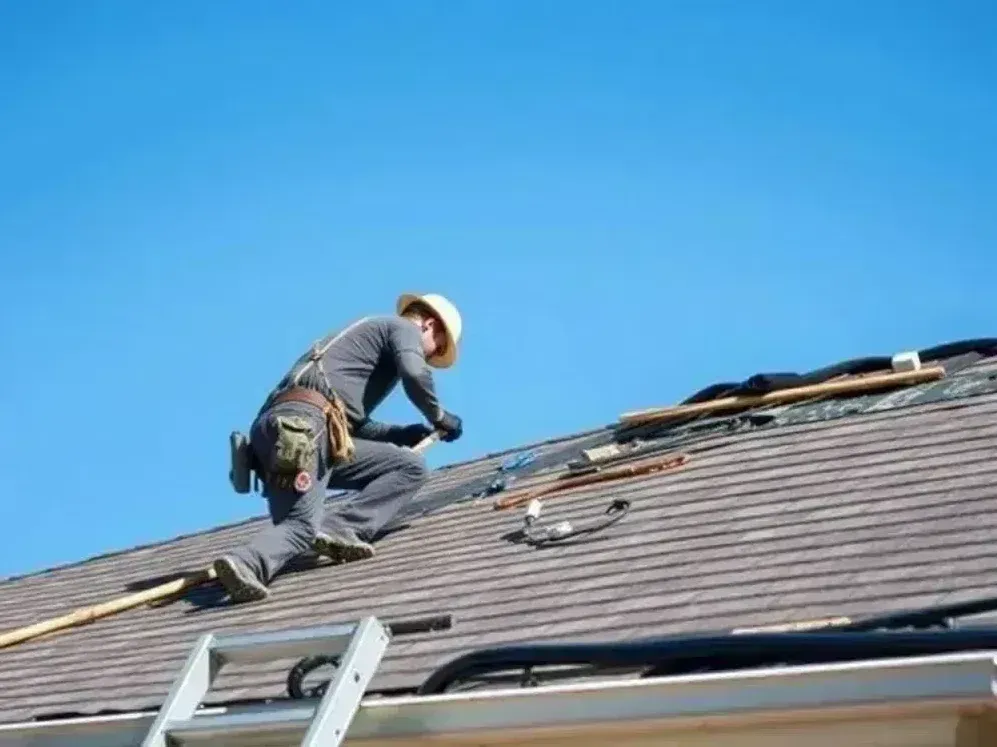
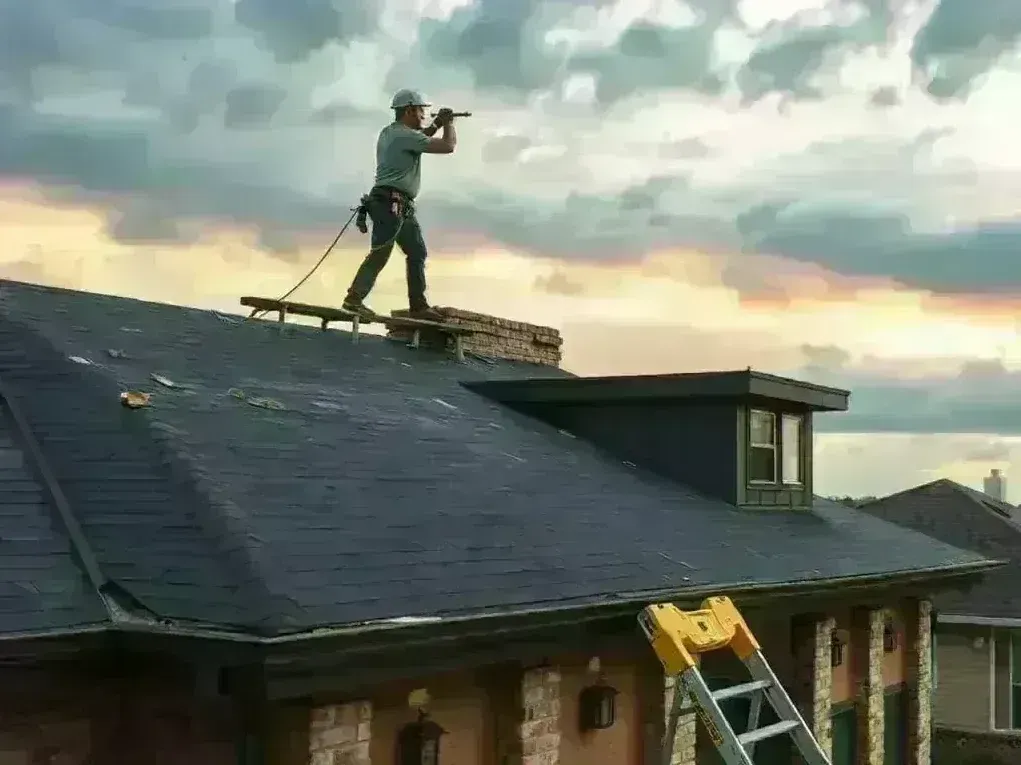
Loose sheathing, whether plywood or OSB, gets replaced and the substrate dries before anything goes back on. We work off ladder, scaffold, and safety harness.
The truck carries a roofing square, nail gun, air compressor, pry bar, and roofing shovel for jobs that turn into a shingle repair, plus the right screw and fastener for each substrate. Torch work stays limited to modified bitumen details on flat sections.
Re-sealing one run and resetting hangers usually takes half a day and runs in the low hundreds.
A full run replacement with new hangers and downspouts takes a full day, and most homeowners land between $650 and $1,500 depending on length, height, and fascia condition.
As a licensed roofing contractor working in Concord since 1988, we have seen enough of these to know when a joint needs resealing and when the run has lost its slope for good.
Call East Bay Roofers at +19257224916 for a free roof estimate. We are licensed and insured, and our work carries a 10-year workmanship warranty plus up to 50-year manufacturer coverage.