Commercial roofing keeps flat and low-slope buildings watertight, and in Concord that job never really stops. Hot, dry summers with occasional fire season winds pull at seams, and winter rain with occasional heavy downpours finds every weak lap.
For a property manager or facility owner, a sound roof is the difference between a planned maintenance line and a tenant complaint you hear about first thing Monday. We quote the whole system, not just the square footage.
Commercial Roofing Systems We Install and Restore
Commercial roofing covers several systems, and the right one depends on your building's slope, insulation, and how much foot traffic the rooftop sees. We specify materials by substrate and by building code rather than by what is cheapest this month.
- TPO membrane is a single-ply sheet we heat-weld at every seam, and it holds up against the UV pounding a Concord rooftop takes in July.
- EPDM is a rubber membrane that stays flexible through moderate temperature swings between seasons, which is why so many older flat roofs here still wear it.
- Modified bitumen is an asphalt-based sheet we torch or set in self-adhered layers, useful where a building needs redundancy over an existing roof deck.
- PVC single-ply resists grease and exhaust, so it suits restaurant and shop rooftops near Todos Santos Plaza.
- Built-up roof (BUR) systems alternate felt and bitumen layers; heavy and proven, still the right answer on some older Concord buildings.
- Metal panel and standing-seam panel roofing shed water fast on low pitches and hide their fasteners under a raised rib.
- Coating is a fluid-applied acrylic or silicone layer that buys years on a membrane that isn't ready for tear-off.
What a Roof Asset Survey Tells You Before You Spend
Commercial roofing should begin with information, so we walk the roof and document what is actually failing. A roof asset survey gives you a budget number and a sequencing plan instead of a guess.
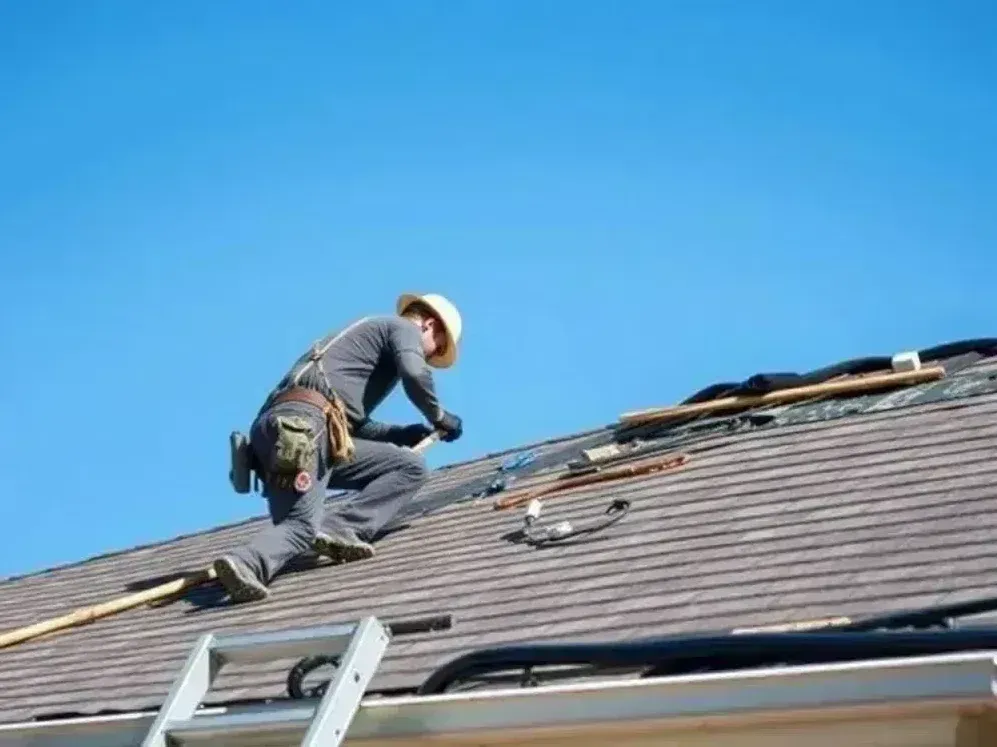
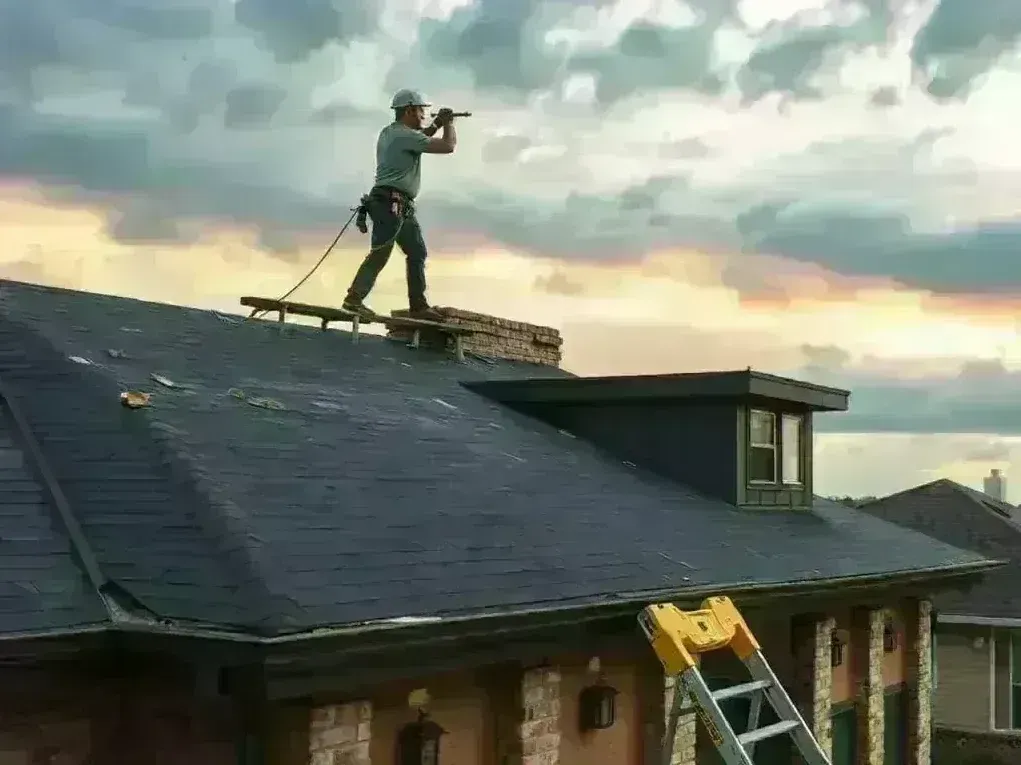
- We set ladders at safe access points and work from scaffold or a safety harness where the parapet is low or the pitch rises.
- We map the roof deck, checking for soft spots, rot, and any sag that suggests a joist, rafter, or truss has taken water.
- We read insulation for moisture content, because wet insulation cannot be recovered and has to come out.
- We inspect parapet walls, coping, and counter-flashing, where wind-driven rain wicks in most often.
- We test scuppers and drains for ponding water, then clear debris and stage a dumpster for the tear-off.
- We review ventilation at the ridge vent, soffit vent, and attic fan so the attic does not cook under summer sun.
- We flag every code item that touches the scope, from roof anchors to edge metal, before the roof estimate is written.
Warning Signs That Commercial Roofing Can No Longer Wait
Damage rarely announces itself on a Concord rooftop. It seeps, wicks, and spreads until a ceiling tile drops in a tenant's office.
- Ponding water that sits more than 48 hours after a downpour erodes seams and accelerates membrane failure.
- Blistering and alligatoring mean the bitumen has begun to oxidize, and the surface will peel from there.
- Delamination at the laps lets water seep under the sheet and rot the decking below.
- Chalking and granule loss on shingle or modified surfaces point to end-of-life wear.
- A split at a valley, hip, or verge opens fast once thermal movement starts in moderate temperature swings between seasons.
- Cracked or spalled masonry at the chimney and parapet lets water wick into the wall assembly.
- Rust streaks under an exposed fastener mean the screw has backed out and lost its seal.
Materials, Flashings, and Components We Work With
Commercial and residential roofing use the same underlying parts, just at different scales. Here is what we install and why each piece matters.
- On pitched roofscapes we install asphalt shingle, architectural shingle, and three-tab shingle, plus wood shake and cedar shake where a historic look is wanted.
- Slate, tile, clay tile, and concrete tile are heavy systems, so we verify the truss and sheathing can carry the load before we quote.
- Corrugated panel and standing-seam panel go over battens or a purlin grid when ventilation under the metal is required.
- Tar, pitch, and bitumen still seal older flat roofs, and we handle and torch them with the care they demand.
- Felt, roofing felt, and tar paper were the old standard; synthetic underlayment now covers most decks because it resists tearing at the eave, rake, and valley.
- Ice-and-water shield runs along eaves and valleys, which matters on the rare night an ice dam forms at a gutter edge.
- Drip edge protects the fascia and soffit, while step flashing, counter-flashing, apron flashing, and boot flashing keep sidewalls, verges, and transitions tight.
- Chimney flashing, pipe flashing, and pipe boot details start most leaks, so each one gets hand-sealed rather than buried in caulk.
- Ridge, ridge cap, and ridge vent close the top of the roof, and a skylight or dormer gets flashed the same way we flash a chimney.
- Gutter and downspout work moves water away from the foundation; we also refit mansard, gambrel, canopy, awning, and overhang details.
- Vapor barrier and soffit vent manage moisture inside, while sealant, adhesive, caulk, mastic, and roof cement close small gaps found during a roof inspection.
- Fasteners matter: ring-shank nails and screws hold shingles, a nail gun and air compressor speed the field course, and a pry bar plus roofing shovel and roofing square keep the decking clean.
- Plywood and OSB sheathing, ridge beam, joist, and rafter repair fall inside our scope when rot has gone deeper than the surface.
- Starter course and field course shingles go down in staggered courses so the joints never line up in a straight line up the roof.
- Snow guard and anchor points stay on the roof for function and safety, and waterproofing plus weatherproofing are the two outcomes we check before we leave.
How to Choose a Concord Roofing Contractor
Commercial roofing is not a place to shop on price alone. Ask these four questions before you sign anything, and get every answer in writing.
- Ask for the written scope, because a one-line quote says nothing about the substrate, insulation, or counterbatten layer being replaced.
- Confirm the roofer is licensed & insured and that the manufacturer warranty gets registered in your name, not the company's.
- Ask whether the job is a recover (overlay) or a full tear-off, since covering wet insulation traps moisture and voids most coverage.
- Drive past a finished job and look at the roofline, because straight edges and clean ridge caps show how a roofing contractor treats details.
What Commercial Roofing Costs in Concord, and How Long It Takes
Commercial roofing costs depend on square footage, system choice, and how much of the deck and insulation has to be replaced. We keep our roofing services itemized so tear-off, materials, labor, and disposal are each visible.
A coating or a targeted repair is the least expensive path and usually takes a day or two. A full replacement runs several days to a few weeks on a commercial building, and we phase the work around tenant hours.
Frequently Asked Questions About Commercial Roofing
How long does commercial roofing last in Concord?
Commercial roofing on a well-installed single-ply membrane typically lasts 15 to 30 years here. System choice, insulation condition, and how quickly ponding water drains matter more than the brand on the box.
Does commercial roofing always require a full tear-off?
Commercial roofing can sometimes recover over a sound existing layer, which trims disposal costs. But if the roof deck or the insulation is wet, tear-off is the only honest option.
Can commercial roofing be done around our tenants?
Commercial roofing gets phased around tenant hours. We stage materials away from entries, keep the dumpster clear of parking, and coordinate access with the property manager each morning.
Does commercial roofing include insurance claim assistance?
Commercial roofing claims go smoother when someone records the storm date, photographs the damage, and meets the adjuster on the roof. We do all three and hand you the file.
What warranty comes with commercial roofing?
Commercial roofing carries our 10-year workmanship warranty plus up to a 50-year manufacturer warranty, depending on the system you select and whether it is registered.
Call (925) 722-4916 or email info@eastbayroofers.com to schedule a roof asset survey. We work out of 2310 Bates Ave #AA, Concord, CA 94520, and estimates are free.